Over the past few years, I’ve gradually shifted away from discretionary momentum trading toward a more systematic approach: tactically trading microcap “quality” names, paired with diversified tactical ETF strategies and explicit hedging. I’m genuinely grateful to have found this forum and the designers whose work has become integral in my process.
Overall, this shift has been a good fit for me. That said, I still feel a few exposures are missing from my current mix:
1) Micro/small-cap names that truly “go bananas” most likely lose on valuation, which is fine and expected — but it still feels like a potential opportunity cost. 2) Mid- and large-cap momentum trades that can compound 20%–10x over relatively short periods (NVDA / TSLA / etc -type moves I used to swing trade). 3) Some exposure to an AI-driven model, partly for diversification and partly to experiment with something structurally different.
In hindsight, the recent liquidity surge probably wasn’t the best time to move away from discretionary momentum trading — but even so, I’m glad I made the switch. The current framework suits me better psychologically and operationally. It feels like something I can age well with. Still, I wonder whether addressing the gaps above could further improve the portfolio. I’m thrilled with my “core” and only looking to add small sleeves of exposure.
Some options I’ve considered:
For (1): allowing exceptional winners from my existing models to “graduate” into discretionary holds, managed manually.
For (2): carving out a small discretionary sleeve to trade growth momentum the way I used to, but with far less pressure since most assets are on relative autopilot.
For (3): following the work of designers like Andreas, Algoman, etc., and potentially allocating to an AI-based model if/when one appears that checks the right boxes.
That said, for (1) and (2), I’d strongly prefer systematic solutions if possible. I know myself well enough to recognize that reintroducing discretion can blur lines and become addictive if I’m not careful. But I don’t see many great options in the marketplace.
At a high level, my goal is twofold:
Add some growth/momentum-oriented exposure (whether mid/large-cap or momentum-driven microcaps) to better balance the portfolio and reduce the urge to trade those names manually.
Potentially introduce an AI-based model for diversification, low correlation, and a “foot in the door” toward future approaches.
I know some of you successfully trade these types of models. I strongly prefer licensing or subscription opportunities, as I’m not even a novice at building systems from scratch. Happy to connect via DM if anyone would like to discuss offline. Thank you!
Warm welcome to the micro/small-cap world, and to systematic, factor- and AI-driven investing. You’ve already done the hardest part by changing the paradigm, and that’s something that will age very well over time.
You’re in the right place: there are many experienced designers in this forum and a wealth of shared work and discussions covering microcaps, momentum, factor models, and AI-driven approaches. Exploring those examples will make the transition smoother and help you evolve your framework step by step.
Thank you, ScifoSpace. I recently came across Carlos’s interview on The Money Runner, and many of his comments about trading really resonated with me. They were a good reminder of why I made the switch in the first place.
Trading momentum and breakouts worked well for me, and I was disciplined about managing risk. Where things went a bit sideways—more psychologically and emotionally than financially—was when I decided to increase exposure. With more on the line, trading such a simple system began to feel foolish, so I added layers of complexity. That only increased stress and ultimately hurt performance.
In any case, I’m very glad to have ended up where I am now. That said, I do occasionally feel like I’m missing out by not having a more “pure” momentum sleeve or some exposure to an AI model. I suppose it’s a reminder to stick with the plan and evaluate additional opportunities as they present themselves.
I was thinking of potentially making a free designer strategy with 100 large cap names but was not sure there would be interest for something with so many positions. Maybe I will make that available 2026. Not a way to get rich quick, but just a high-capacity way for members to have good returns in a diversified way
I’m always a fan of new models coming to market. Personally, it would be hard for me to justify trading 100 large-cap names. I initially had concerns about the capacity of the microcap models I trade, but hearing Yuval’s experience and success managing a much larger account than my own helped ease those concerns. As a result, I tend to lean into the microcap models.
Going back many years, I didn’t use any hedging strategies, nor was I aware of ETF-based models like the ones I now blend together. Because of that, I didn’t feel comfortable putting significant exposure to work. At the time, I mostly traded only a fraction of my account—and fortunately did extremely well—but again, only with a small portion of the total.
Today, I feel I have a very well-rounded, largely systematic framework that’s close to fully automated (even though execution is still manual). The one thing I feel is missing is a small sleeve that can truly swing for the fences. Now that the majority of my assets are allocated to models I trust to perform well with controlled risk, I could add back that sleeve of discretionary trading. Even so, I am hesitant to blend the worlds. Instead, I’d like to find a model that fits this role and helps accomplish that goal.
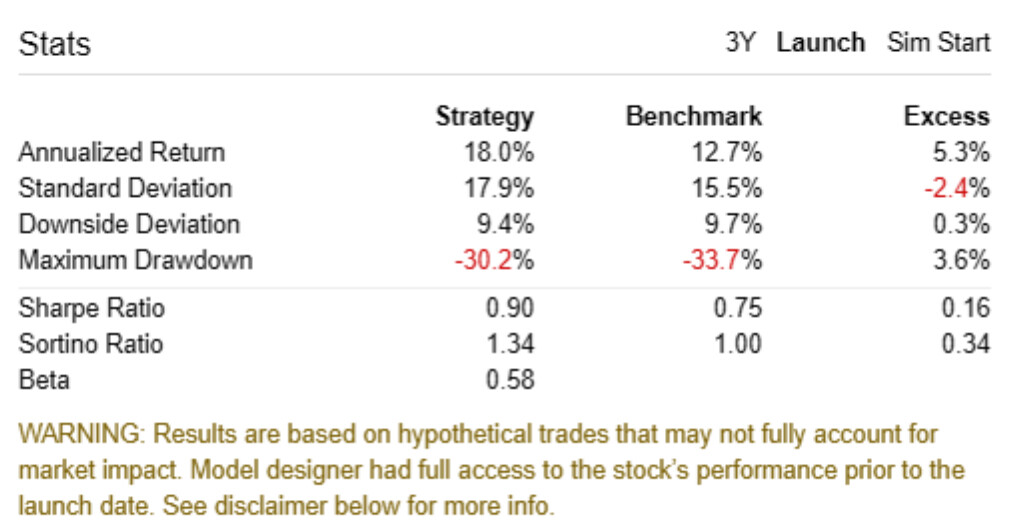
Yes was a tough year for many healthcare names and because of the way the stop loss works in designer models with a lag vs how stop loss needs to be implemented the performance shown was deep in the red.
It goes to show one bad year in a concentrated portfolio can be quite damaging since it was beating the market by 5% annualized since inception (2014) before that!
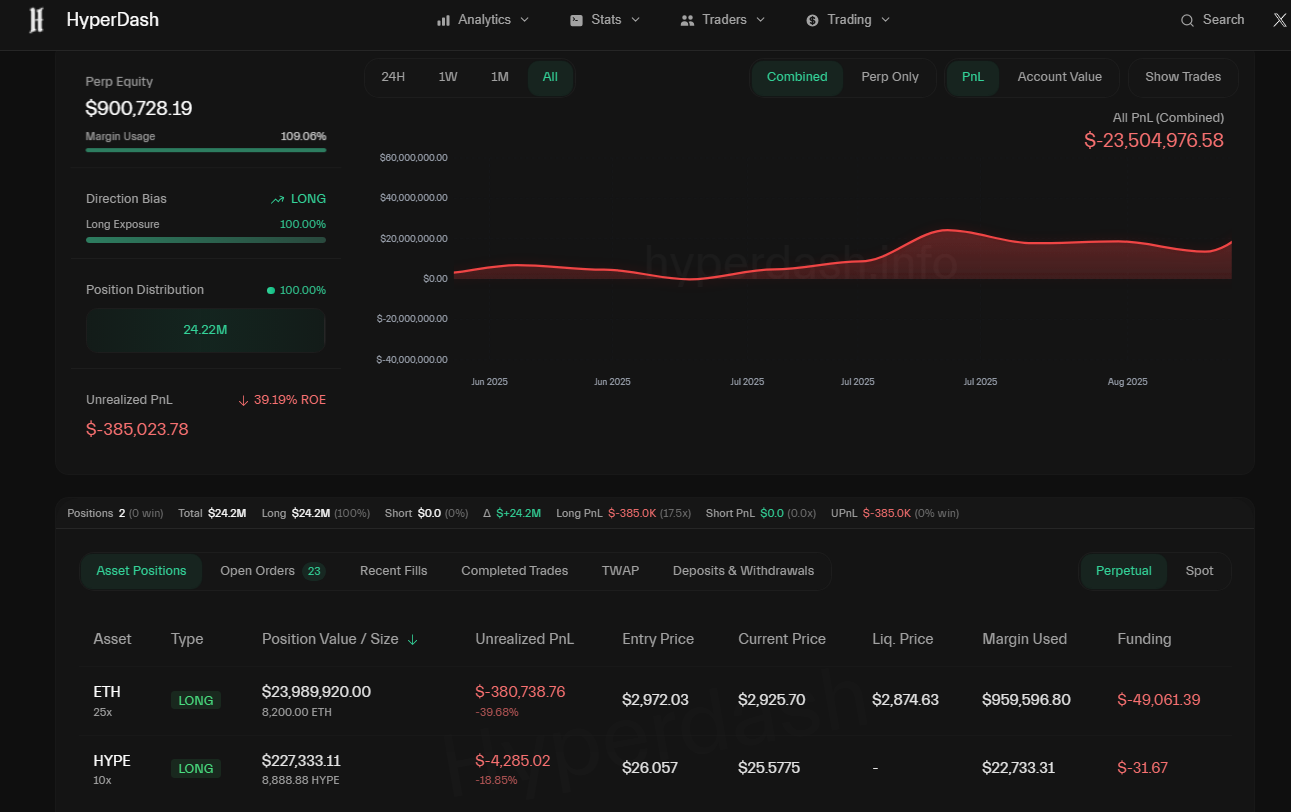
The performance of your existing designer models are not too bad year-to-date if you compare with Machi’s trading portfolio. He was down -150% during the past 3 months(from over USD 43 mio profit to minus USD 22 mio now).
Here is the link to monitor Machi Big Brother trading real time. (yes all transaction data is publicly accessible, verifiable, and immutable if trading is done on a DEX platform like Hyperliquid (instead of CEX like Coinbase or Binance). Here is something from Google AI.
Transparency in public blockchains
Publicly Viewable Data: Anyone can view the details of every transaction that occurs on the chain. This includes the sender's wallet address, the recipient's wallet address, the amount transferred, and the time of the transaction.
Auditability: The entire transaction history is permanently recorded and tamper-proof (immutable), creating a reliable and auditable trail that allows users to verify all activity has occurred correctly and without double-spending.
Onchain Analysis: Traders and researchers can use this public data to track "whale" movements, spot market trends, and analyze real user behavior, insights that are unavailable in traditional finance.
While everything is visible : the participants' real-world identities are typically pseudonymous, linked only by their wallet addresses. In here, this is Machi’s wallet adress (as shown in the last part of the link above). 0x020ca66c30bec2c4fe3861a94e4db4a498a35872