Airport Lounges Sound Luxurious. I Keep Getting Duped

Dear all,

Did you fly recently during Christmas and the New year holidays? Do you notice this from the Airport Lounges?

Here is something interesting from New York Times.

Regards

James

Airport Lounges Sound Luxurious. I Keep Getting Duped.

It was only when my partner and I arrived at Orlando Airport in May that I realized my crucial error: I had forgotten to prebook the one lounge to which I had access. The Club MCO lounge was full, so we joined the queue to enter our names in the much-longer digital queue.

After 20 minutes of standing around, we gained entrance to what looked like a breakfast buffet at a budget hotel: beige walls, tired carpets and a small selection of food that looked far less appetizing than the options at Bahama Breeze, the wonderfully tacky, Caribbean-themed restaurant in the terminal. Sipping on a weak gin and tonic, and picking at a sad cup of gummy bears, I had to ask myself: Why exactly was I so desperate to be here?

There have never been more airport lounges. Yet there also have never seemed to be more lounges that are not worth the hassle. Many are forlorn. Many others are overcrowded; sometimes the lines for the lounges are the longest in the airport. Yet we all still fight to get in. Many of us will choose to fork over too much in credit card fees or commit to flying on one airline to gain entry to these spaces, because we still believe they offer a taste of luxury amid the stress of travel. In our iPhone age, we have been sold on the idea that travel is no longer just about the act itself, but about being seen to be traveling — and being seen to do so in style. Just don’t tell those sitting at Bahama Breeze that they’re probably having a better time.

A month after my sojourn at Orlando Airport, I would question my lounge loyalty again, this time after receiving an email alerting me that the annual fee for my Chase Sapphire Reserve card — a premium credit card favored by my fellow millennials, which comes with access to lounges around the world — was jumping from $550 to an eye-popping $795.

This new fee was accompanied by a confusing raft of other changes designed to justify the bump: a $500 resort credit, $300 to spend at a list of restaurants, membership to Apple Music, etc. But even as I dived into this complicated mental math and debated whether I was ready to leave Spotify, my eye fell to the photo embedded in the email of the new, convolutedly named Chase Sapphire Lounge by the Club at the Philadelphia International Airport. Although I had flown through the City of Brotherly Love only once in my lifetime, I still found it alluring. The space resembled a sexy bar in a ritzy hotel lobby, complete with plush furnishings and mood lighting that appeared flattering enough to make even the most weary traveler look like James Bond sipping a martini.

While Chase has built a handful of fancy clubs (with plans for more), most of those my card gives me access to are decidedly less glamorous. In some of them, with their cubed cheese and powdered eggs, I’ve felt less like Bond and more like Melissa McCarthy’s frumpy cat lady in the 2015 action comedy “Spy.”

Ben Schlappig understands my sentiments. Mr. Schlappig, founder of the flight and travel website One Mile at a Time, estimates he has visited more than 500 lounges since he began chronicling his globe-trotting in 2008. He cites such unpleasantries as overcrowding and sitting next to someone exhibiting what he calls “airport behavior” (like chatting loudly on a speakerphone). Occasionally, when he knows a lounge will be one of the sad ones where the buffet seems like “a feeding trough,” Mr. Schlappig — who has premier status with American AAdvantage and Air France-KLM Flying Blue — even prefers to simply — gasp! — wait by the gate.

“At some point,” he told me, “when everybody has lounge access, it’s almost like nobody does.”

It certainly feels like everybody does. Collinson, the company behind Priority Pass, reported a 31 percent increase in lounge visits in 2024 compared with the year before. More than half of frequent travelers visit lounges, according to a survey last year by Airport Dimensions. The market research firm Research and Markets predicted the $4.21 billion airport lounge industry will more than double by 2029.

Once reserved mostly for older, frequent business travelers, lounges are increasingly being invaded by people like me: millennials who balk at the cost of a first-class ticket but can afford an annual credit card fee. Even though demand for travel appears to be waning amid an uncertain economy, what hasn’t changed is the extent to which social media and influencer culture peddle these lounges as a key ingredient of the good life.

With interest through the roof, little wonder that the lounge industry is becoming embroiled in something of an arms race. Credit card companies like Chase and Capital One race to erect fancier lounges to satisfy increasing domestic demand — and even no-frills Southwest Airlines considers whether to follow suit. International airlines are going further and further to attract those truly wealthy customers willing to fork over thousands for top-class travel. In Helsinki, Finland, you can take a sauna before consuming a reindeer burger. In Doha, Qatar, you can relax in a Jacuzzi, drive in an F1 racing simulator or take a nap in a private bedroom. In Paris, you can dine in a private suite on food prepared by the renowned chef Alain Ducasse, then be driven in a luxury sedan on a tarmac to your plane. If the people in economy found out how the 1 percent were being pampered, there would probably be another French Revolution.

In addition to building more lounges, many operators are trying to thin the herds by making it harder to get in. Capital One announced that next year it will take steps to limit access for members seeking to bring additional cardholders and guests, mirroring recent steps taken by Delta Air Lines and United Airlines. Lounges “tend to resemble nightclubs, the way they’ve gotten so popular. I’ve seen literal velvet ropes outside many of them,” Scott Laird, a travel writer, said in a piece that called lounges a crowded waste of time.

One credit card company is dispensing with the airport altogether. American Express now operates a private club in Manhattan for select holders of its Centurion Card (known as the Black Card), part of a wave of pricey members-only clubs that have recently been repopularized in cities around the world. Evidently, there will always be a market for living the high life — particularly if you can live it away from others.

Airports and airplanes have long been places where people are regularly and openly sorted into classes, and there is something innately human about striving (or paying) to get to the top — or at least a half-step higher than where you started. While many of these lounges feel crowded and unremarkable, they still allow you to cosplay, however briefly, as a V.I.P.

All this complaining is, of course, deeply frivolous in the grand scheme of things. Travel is a privilege. But money is also precious, and it’s OK to question what we’re being sold.

That said, there is one type of airport lounge that I remain deeply committed to: the arrivals lounge. During a recent long-haul flight from New York to see family in Sydney, Australia, my plane stopped in Auckland, New Zealand, after almost 18 mind-numbing hours of flying. When I cleared customs and waited for my final connection to Australia, I raced to the nearest Priority Pass lounge and took the most incredible shower of my life. I would have paid whatever they had asked.
Having tried a number of these, the Centurion Lounges are usually better than the Priority Pass ones described by the article. The Centurion and Platinum cards give access to the Priority Pass lounges like the Chase card, but they also have the Centurion lounges. Of course, it will not be like flying private and eating your favorite food though. Lounges are usually free

SZ,

Yes, I know that the Centurion Lounge which requires the Black card offers private dining with Wagyu Beef and Abalone in Asia.

As you mentioned, it is more common for people to fly private these days. Most airlines are cutting back on First Class. So it is either Business Class or flying private for most routes.(the cost are pass-on as fees on travel expenses for those working in multi-strat hedge funds).

Regards

James

No you dont need the black card! I dont have a black card just the platinum

SZ,

You can enter the Centurion Lounge with Platinum and exclusive fine dining area (in Asia) is for Black Cards only based on my understanding from a friend since I don’t use Amex cards.

Regards

James

So basically most Amex lounges are called “Centurion Lounges” but you do not need the Centurion card to use them, just the Platinum card. They tend to have decent Buffett food compared to airport options and beverages and if you travel often it can be a good deal

SZ,

I just found this article on WSJ about the increasing population now flying private.

Regards

James

How Flying on a Private Jet Became the No. 1 Marker of Real Wealth

By

Gunjan Banerji

Aug. 3, 2025 8:00 pm ET

Quick Summary

  • Demand for private jets is surging as more people join the ranks of the ultrawealthy, with some paying in crypto.

  • The wealthy are spending big on private aviation to avoid commercial travel, with perks like luxury dining and skincare.

  • Wealth-management firms are offering private aviation services, advising clients on aircraft purchases and financing options.

When Maxx Chewning sold his sour-candy business to Hershey for $75.5 million, the first thing he did—before buying a Rolex or dream home—was jet his wife and six friends to Vail on a Dassault Falcon 900.

They skipped security lines, zipped straight to the runway and seated themselves in leather recliners with gold accents in the wood-paneled cabin. The price tag for this adventure: $100,000.

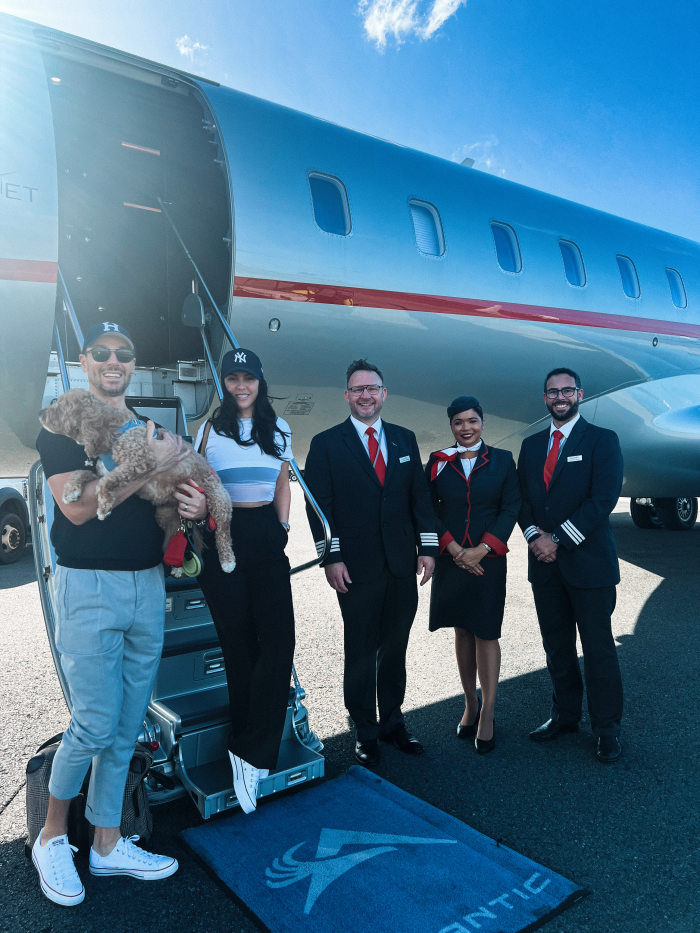
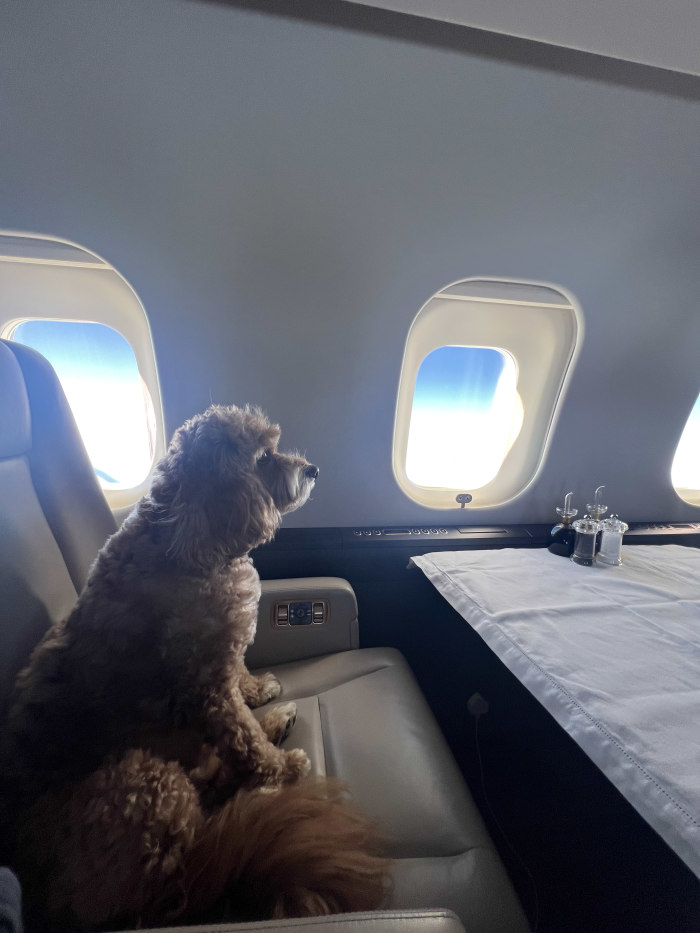
Chewning’s goldendoodle, Dood, sprawled at their feet. “The joke is, I had to get a private plane so I could bring my dog,” the 35-year-old said. “I didn’t really care what the price was.”

The ultrawealthy have always enjoyed flying private. That exclusive club is growing, as soaring stocks and crypto prices mint more millionaires and billionaires, who now have a range of choices to book a seat on a jet.

Flying private has become the ultimate luxury splurge for many wealthy individuals, surpassing Ferraris, Hermès Birkin bags topping $14,000 or even waterfront Hamptons homes. For many of those aspiring to join the ranks of the truly rich, having “private-jet money” is the new goal, dividing the 1% from the 0.1%.

The pandemic unleashed a burst of demand, but providers say popular culture has turbocharged enthusiasm and envy for the fly-private lifestyle. Social media has given younger people a glimpse into the lives of jet-setters, whether it is a model flying with friends to a bachelorette party in Los Cabos, Mexico, or a hedge-fund manager hopping a plane to a birthday weekend in St. Barts.

Realistic expectations are in order. “It is my dream to fly private,” said a user on a Reddit forum for so-called Henrys (which refers to high earners, not rich yet), adding that he earns about $300,000, is married and has a kid in daycare.

“Definitely closer to broke than flying private,” another user responded.

Yet the number of people who are rich enough has surged. The club of ultrahigh net worth individuals with more than $30 million in assets hit a record in 2024, according to estimates from the wealth-intelligence provider Altrata. The U.S. added more than 1,000 millionaires every day last year on average, according to UBS. The billionaire club grew more than 50% between 2015 and 2024.

Private-jet hours flown touched an all-time high in 2022 and have stayed elevated since then, according to data from the aviation-services firm Argus International. Travelers can now use apps to snag individual seats on private jets or pay for flights by the hour. Others charter flights, paying for just the occasional trip from New York to Miami, while the rare business mogul might spring for the entire jet.

Some jet providers accept payment in crypto.

Shrimp cocktail and facials

Kenn Ricci, a pilot and chairman of Flexjet, a private-jet company, said the “frugal wealthy”—high earners who typically didn’t splurge—started spending big on travel during the pandemic because of health concerns. Many of them have found it tough to go back to flying commercially. And years of economic growth have helped ease the stigma around conspicuous consumption that set in after the 2008-09 financial crisis.

“It’s in vogue to be wealthy,” he said. “Sometimes we love the rich. Sometimes we hate the rich.”

It isn’t just avoiding the security line, or the hoi polloi. Flying private means trading Biscoff cookies for freshly baked ones and picking lunch of shrimp cocktail or filet mignon from menus spanning a dozen pages. Chef Nobu Matsuhisa crafted a menu for VistaJet that includes miso salmon. Some cabin hosts are trained to give travelers facials 40,000 feet above the ground—with Dr. Barbara Sturm’s line of luxury skin care.

Tennille Holt spends much of her time traveling the world with her husband and 8-year-old cavapoo, Hudson. Tennille Holt

Flexjet hosted members in Lake Como last year, whisking them to a yacht excursion and black-tie dinner. Guests tried on jewels by Garrard, the jeweler that has designed pieces for England’s royal family, including brooches for Queen Elizabeth II.

Tennille Holt, 44, retired in 2023 and now spends much of her time traveling the world with her husband and 8-year-old cavapoo, Hudson. Hudson has his own Instagram account documenting his life, including his private-jet flights, where he is often served his favorite: grilled chicken.

She and her husband spent around $200,000 to fly Hudson from Australia to Los Angeles in a Bombardier Global 6000 and avoid the commercial flight. She recalls dreaming about this flexibility while working long days and nights as an entrepreneur.

“The goal was to create the freedom to live life on our own terms, which now includes plenty of travel and the ability to fly privately whenever we want, ” Holt said. “It’s the best and most comfortable option for Hudson.”

Flush with cash

Around a third of wealth-management firms working with high-net-worth individuals now offer concierge or lifestyle services, such as private aviation, according to a survey by Cerulli Associates.

Money managers for the superrich advise tech and crypto millionaires and billionaires on exactly which aircraft to buy and how to finance it. They liaise with bankers on issuing debt should clients prefer to borrow the money against their swelling investment portfolios—making monthly interest payments on the aircraft rather than putting tens of millions of dollars down.

After noticing heavy spending on flights, Corient, a wealth manager with around $200 billion in assets, started helping clients team up to share private jets by buying fractional slices of planes or prepaid jet cards.

Family offices, which are private entities that manage large pools of money for wealthy families, are turning to advisers to help them purchase jets outright, which can run into the tens of millions of dollars. Some advisers connect clients with those who can train aircraft crews or offer concierge services for trip planning. At Goldman Sachs, dedicated plane experts connect their ultrarich clients with financiers and point the clients to those who can customize interiors or renovate jets.

Hudson during a trip on a private jet. Tennille Holt

Nishi Somaiya, global head of private banking, lending and deposits at Goldman, said there has been a flurry of inquiries this summer. President Trump’s tax overhaul includes a deduction for aircraft used for business travel, a welcome perk for clients who frequently mix their work trips with pleasure.

Kevin Hooks, 63, a Flexjet client and veteran flier, said he spends around $800,000 annually mostly crisscrossing the Southwest in a Praetor 600 midsize business jet that seats 9. He has noticed plane hangars around the country growing more crowded because of increased demand since the pandemic.

Hooks, who has been flying privately since he sold his pharmaceuticals business around two decades ago, has also taken a liking to private helicopters, recently taking one between Normandy and London. The trip saved him eight hours, giving him more time to search for buried World War II relics.

He sometimes still takes commercial planes. He recalls the time his son, then 4 years old, got on a Southwest Airlines flight and asked, “Who are these other people on the plane?”

Write to Gunjan Banerji at gunjan.banerji@wsj.com

It has been growing for sure. I know that Netjets (fractional jets and access cards) was a great investment for Warren Buffett since post GFC QE (but not before) . Although from the people I have met yachts tend to be even more of a status symbol between high-wealth folks and it gets crazy–they want bigger and bigger boats full of crew. Hopefully, AI and robotics can ultimately make these more affordable for everyone. If we do have these become affordable, I have invested in a yatchmaker stock, basically the Ferrari of yatchs with pricing power.

I definitely do not have a jet but if I ever do something like that it probably would be like a Netjets share.

SZ,

The best thing is that you don’t need to own a jet to fly private these days. It is now possible to just rent it out with the profit you just made in stock market and maybe from selling the company.

By the way, if you do own a jet. I am sure Amex will be rushing in to give you an invitation to the Black card (instead of Platinum):slightly_smiling_face:

Regards

James

Hahah yes if I use the platinum card