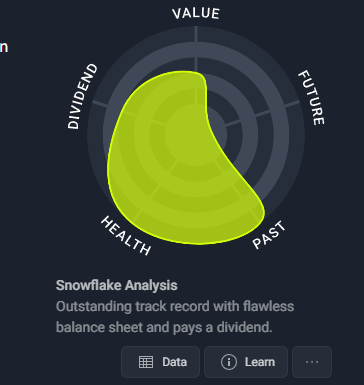
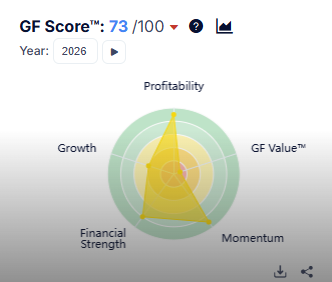
I am aware that behavioral finance makes it clear that in quantitative models, investors often make subjective choices, even though the quantitative system is supposed to be built on the model making the selections. But how many of you slavishly follow the model and those that score highly, and how many of you make an individual assessment afterward, and what assessments do you make then?
For example, now, I am going to have a new stock. These three score highly with me, and the first scores best:
QRHC:USA Quest Resource Holding Corp.
OESX:USA Orion Energy Systems, Inc.
DHX:USA DHI Group, Inc.
I recently made a few emotionall trades (financial data providers), totaling about 2.5% portfolio weight. But overall, I follow my quantitative system strictly. Even if it selects a tinny, “crappy” stock, I execute the trade without discretionary analysis. With ~40 holdings, overthinking individual names defeats the purpose.
One nevw habit is using AI agents to score my current holdings as potential AI beneficiaries or victims. I may slightly adjust weights based on that score, but stock selection remains systematic.
I occasionally “skip” some stocks, typically reasons: I’m worried about being very overweight certain sector, if the company looks “too weird”, or if the long-term momentum is horrible. However, most of the time I just buy whatever the system recommends, thinking that if it’s dumb then diversification will limit the damage. I do feel that a non-trivial amount of alpha for systematic investing comes from systems recommending non-intuitive stocks that humans would not like.
While there are always odd cases, in general I think breaking well designed rules is usually a bad idea. The point I would make though is that not all rules or steps in a system have to be systematically applied with no human intervention as it might not be practical or feasible or the data might be missing, etc. Of course, the more you can automate the better for your workload
I think there is nothing wrong with a system going beyond what can be automated as long as the additional steps make sense and are validated by experience and data/research. Of course the more open the system, the more your discretion will take over which can be a bad thing or a good thing depending on the person. Usually better to have clear standards/guidelines
I have looked at using Claude Cowork to red-flag stocks that just announced with bad data that is not yet included in the FactSet data.
But this is risky if it can not be backtested. Are there active traders who see that and those stocks gap down–filling the gap? If so the red flag would hurt me a lot and I would never know what was happening. Still using an LLM to get immediate data from SEC’s EDGARS is something a lot of people will be doing and I don’t want be the last to act on new data.
I 99% follow my system and try to incorporate all reason to skip stuff directly into the universe or strategy rules. Only time I cheat is if a stock is for some reason much more illiquid than modelled or non-tradeable or if the position size settings leave me with a weird “large position + idle cash” situation instead of just buying 2 equally sized new tickers (in those cases I use then X-ray plus minimal discretion)
I don't "cheat" but I'm constantly tweaking my system to adjust for weird stuff that gets thrown at me. For example, Fidelity gave me a 999% margin requirement on five of my shorts, so I called them and figured out that for some of them it was because they were nanocaps and for others it was because they were crypto treasury companies (not crypto miners). So I then added new buy rules to eliminate those. (Screening out nanocaps was easy, but it took some work to screen out crypto treasury companies: I came up with Correl (1, 60, GetSeries ("BTC")) > 0.7 and CostGA < 0.02 * AstTotA.) Here's another example: Fidelity charges me $50/order for certain Canadian F-Shares like XAUMF and MNSAF, which is not horrible, but then limits the number of shares I can order at a time, which makes them very expensive to trade in bulk. So I manually adjust the transaction costs for those two stocks before my spreadsheet spits out its orders.
I don’t manually modify what comes up in the models. However, as Yuval mentioned, if something unusual arises, it should be reviewed to prevent it from happening again in the future. Most of this process should ideally be completed before the implementation phase, but there are always things that can surprise us.
I tried using grok to score stocks (1-10) for the potential gain coming month in one of my strategies once a month for three months, then I checked the outcome. The result was horrible, at best random. This was more than 6 month ago and the AI's are improving crazy fast, so might give it another go in a few months or so.
I follow my model 90%-95% of the time. My universe is micro/small cap banks so bid/ask spreads can be problematic. Sometimes I can buy at a desired price, other times I have to accept that the slippage is beyond acceptable. One other area is credit risk, as banks have the means to "hide" more bad loans than one can easily discern from their filings. I've built formulas to cull out most, but sometimes I need to look deeper (particularly around earnings season when some of my imported data gets stale).
Rarely on an individual stock level as my judgement as not on average played out.
My approach involves calculating a metric and setting boundaries for the weight a given screen gets. Sometimes the unfunded, probationary half weight, and fully funded get a little fuzzy or delayed a week to eliminate some turnover.
How has it gone using such a technical filter afterward? Has it yielded better results, and which service do you use?
I occasionally experiment with a form of "second" opinion, so I can sometimes see how the stocks do it on other algorithmic models like those below. But I really don't know if they actually help or not.
So far to be honest it is worse than just following the system. But results still good.
I believe I will find something that can beat just following the P123 ranking by itself.
This is just my personality…if I didn’t think I could beat a “system” then I would still be just buying the index!