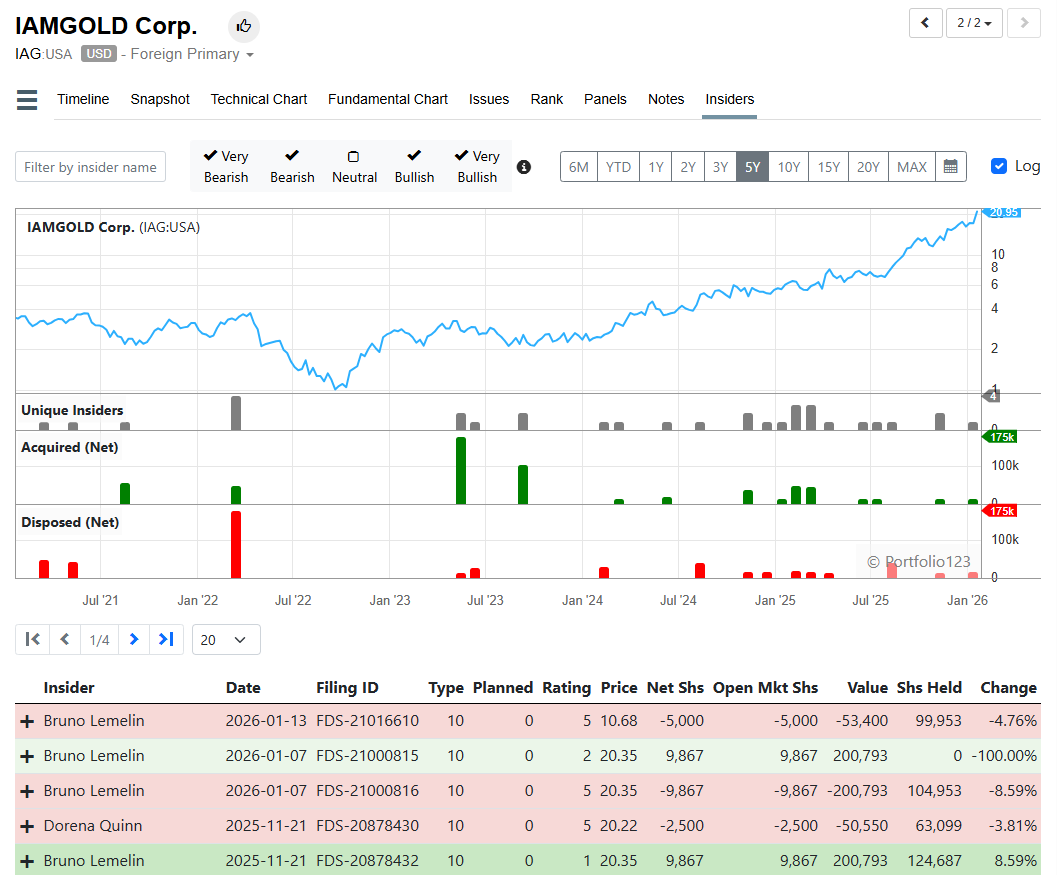
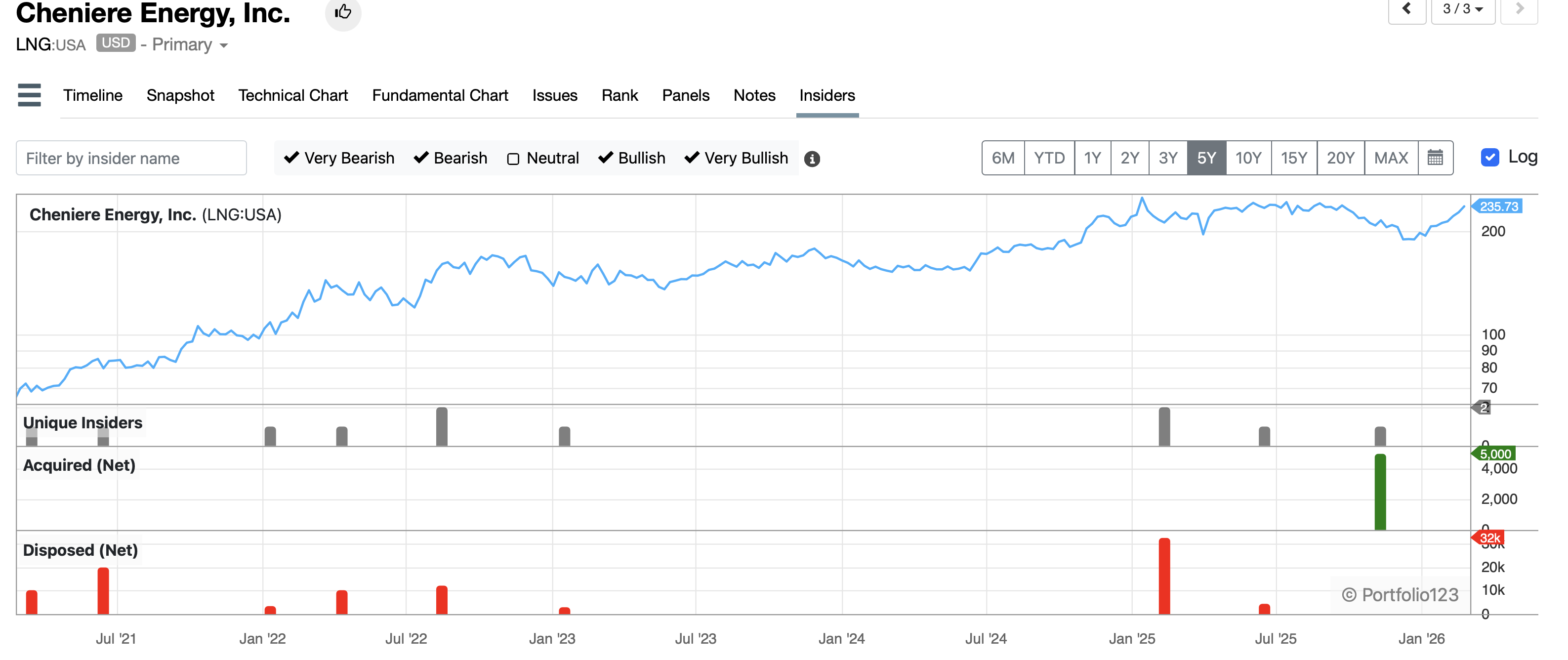
I am trying to figure this out. What are Bruno’s transactions telling me? see lines 2 and 3.
I am very interested in this. Is there a timeframe of when this will be available for backtesting in our models?
That appears to be an options exercise so ordinarily would have been neutral which makes sense given his sells on the 13th. The fact that it is Canadian seems to be perhaps causing some categorization differences.
@marco was this taken from SEC or SEDI? SEC is blank no? We eventually might need to review the format of SEDI data if it is from SEDI (Canada). It could be being pulled because it is a Canadian issuer but not sure what we are doing for Canadian issuers. I do see the Filing ID is SEDI format and not SEC notation
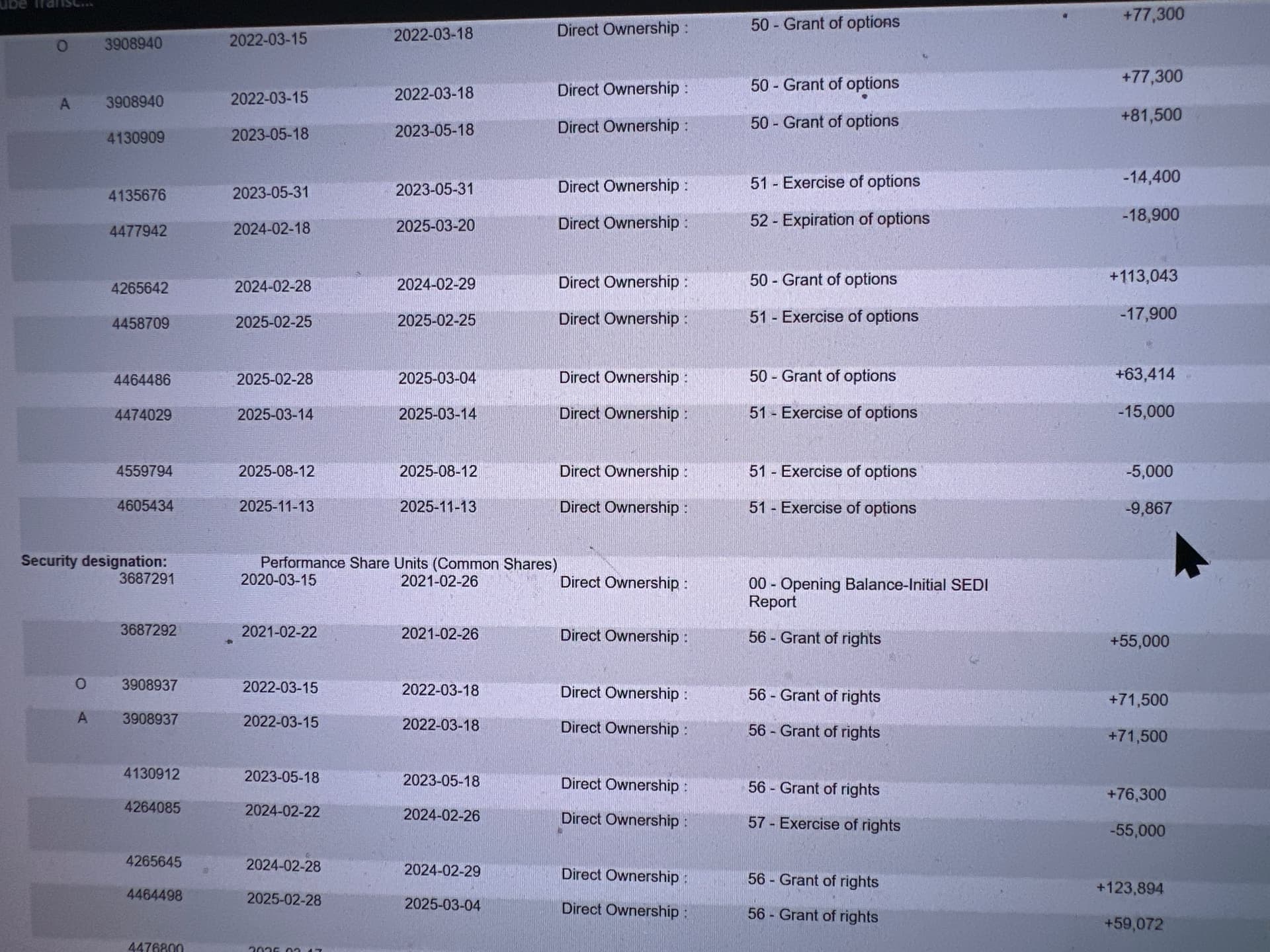
@RTNL perhaps not absolutely always the case, but as a rule of thumb when I see the same amount of shares both bought and sold and same price it tends to be an exercise. I confirmed it via SEDI
Will LNG work?
Claude.ai sourced. Review prior to taking any action.
The supply bottleneck. About 20% of global LNG transits the Strait of Hormuz, primarily from Qatar, the world's second-largest LNG exporter. Qatari infrastructure was directly targeted by Iranian missiles. If the strait stays closed, a significant chunk of global LNG supply is physically stranded.
Europe's vulnerability. Europe spent 2022 through 2024 rebuilding LNG import capacity after Russia cut pipeline gas. That means Europe is now heavily dependent on seaborne LNG, and a Hormuz closure directly threatens that supply chain. European spot gas prices were already moving before their equity markets opened.
Cheniere's structural advantage. Cheniere is the largest U.S. LNG exporter, operating from the Gulf Coast with no exposure to Hormuz transit risk. Its contracts are priced at a fixed spread to Henry Hub (the U.S. natural gas benchmark). So when European spot LNG prices spike due to a supply disruption half a world away, Cheniere's contracted volumes become cheap relative to the spot market. That gap creates optionality through cargo diversion and secondary sales at elevated prices.
Why it's distinct from just buying energy. This isn't a crude oil bet. XLE captures the broad oil move. Cheniere captures something different: a supply-constrained infrastructure monopoly on U.S. LNG exports at the exact moment Europe needs non-Hormuz LNG most urgently. The thesis doesn't require oil to keep climbing. It requires the strait to stay disrupted.
The specific fork. A position in Cheniere is a bet that the Hormuz disruption lasts longer than Trump's stated four-week timeline. If diplomacy reopens quickly, the trade fades. If the closure extends past two weeks, European spot prices push materially higher and Cheniere re-rates on demand urgency. That's the binary the position is priced on.
Great one (rocket)
Polymarket is predictive of earnings beats for sure: New use case for P123 AI? - #25 by Jrinne . Maybe politics too. If so, this suggest that the strait of Hormuz closure is likely to extend beyond 2 weeks–assuming a cease fire is related to safe reopening, of course.
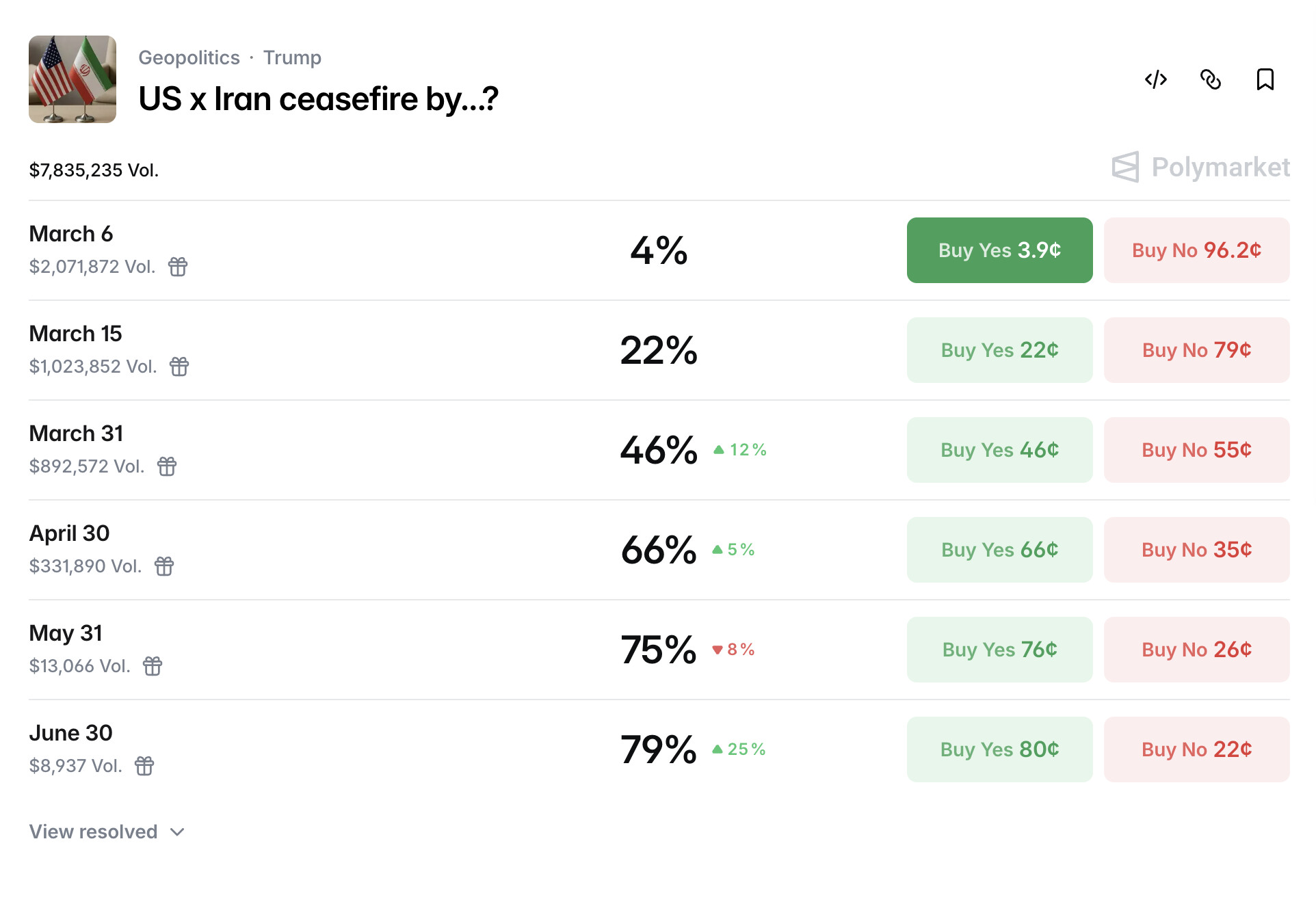
Related to how strong the ceasefire connection to reopening really is, Iran has lost warships in the region, but they could continue asymmetric warfare with drones and less so with mines, for example. Keeping passage unsafe. Not sure what the Polymarket odds might be on that.